The monitoring infrastructure
for AI agents
Checkly provides live application performance signals to LLMs and agents to enable them to detect, communicate, and resolve outages in real-time.
// Agent responding to production incident
const incident = await checkly.alerts.latest()
const diagnosis = await agent.analyze(incident)
const fix = await agent.generateFix(diagnosis)
await agent.deploy(fix)
await checkly.checks.run('checkout-flow') // Verify fix
World-class engineering and SRE teams depend on Checkly to deliver reliable digital experiences






Create and manage synthetic monitors programmatically.
Agents can spin up browser checks, API monitors, and heartbeats using the CLI, SDK, or API. Define monitoring coverage as code and deploy it alongside your application.
DocsA reliability layer built for AI-driven systems
From detection to resolution, Checkly delivers live production signals to LLMs and agents so they can act on incidents the moment they happen.
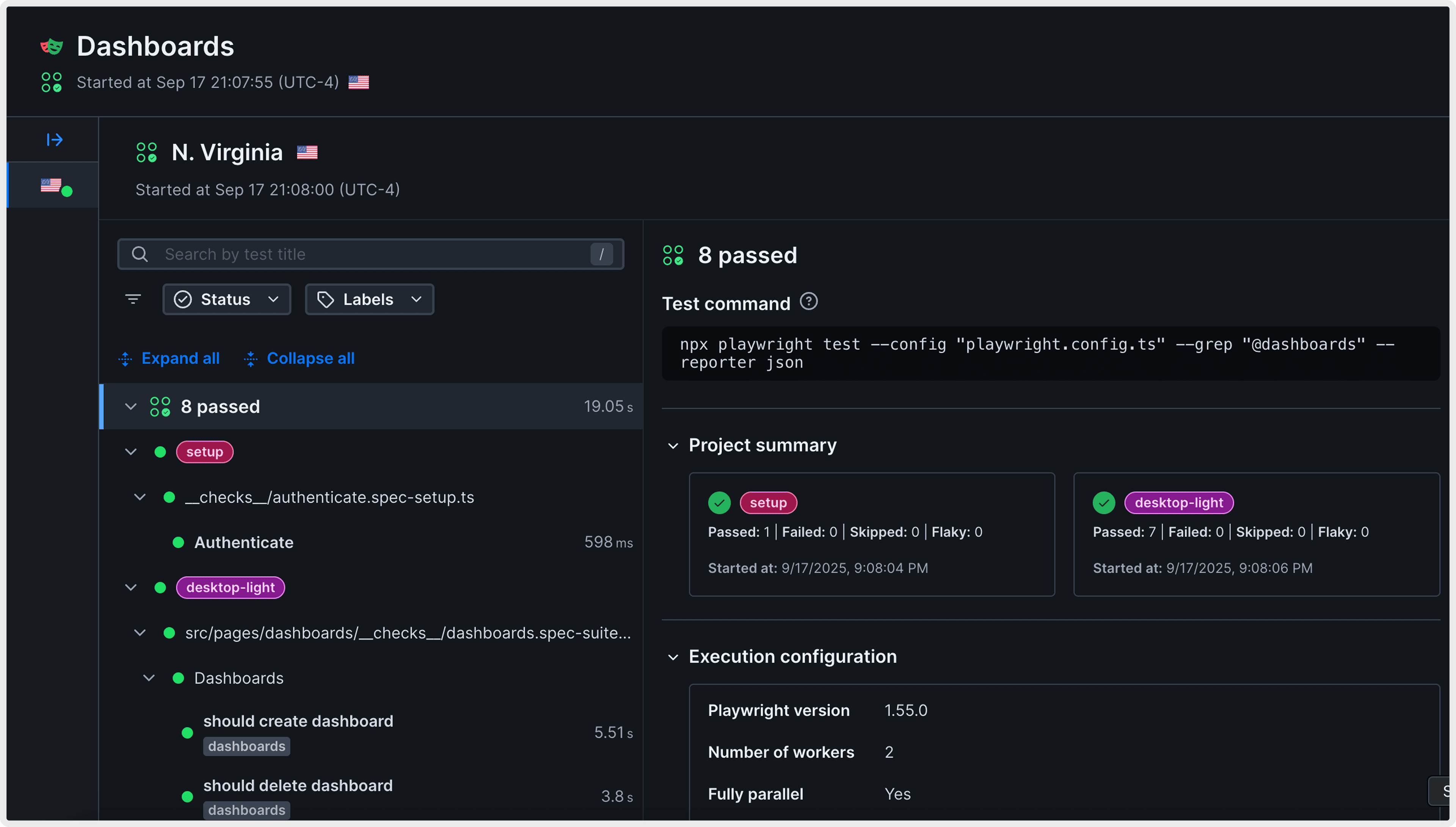
CLI
Command-line first experience
A CLI that agents can invoke directly. Run checks, deploy monitors, and get results from the command line in real time.
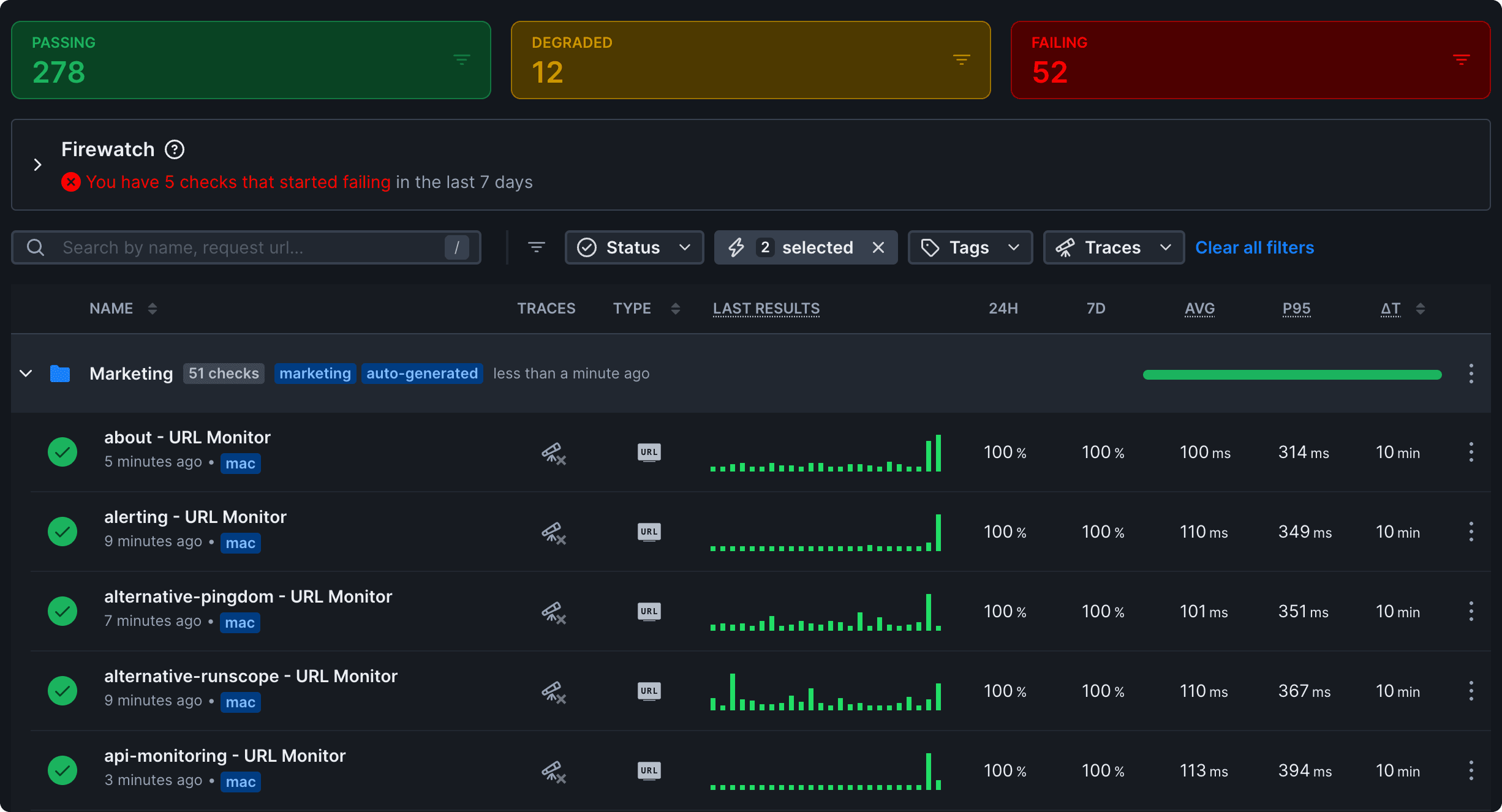
Webhooks
Real-time event delivery
Instant notifications when checks fail or recover. Agents receive structured payloads with full context.
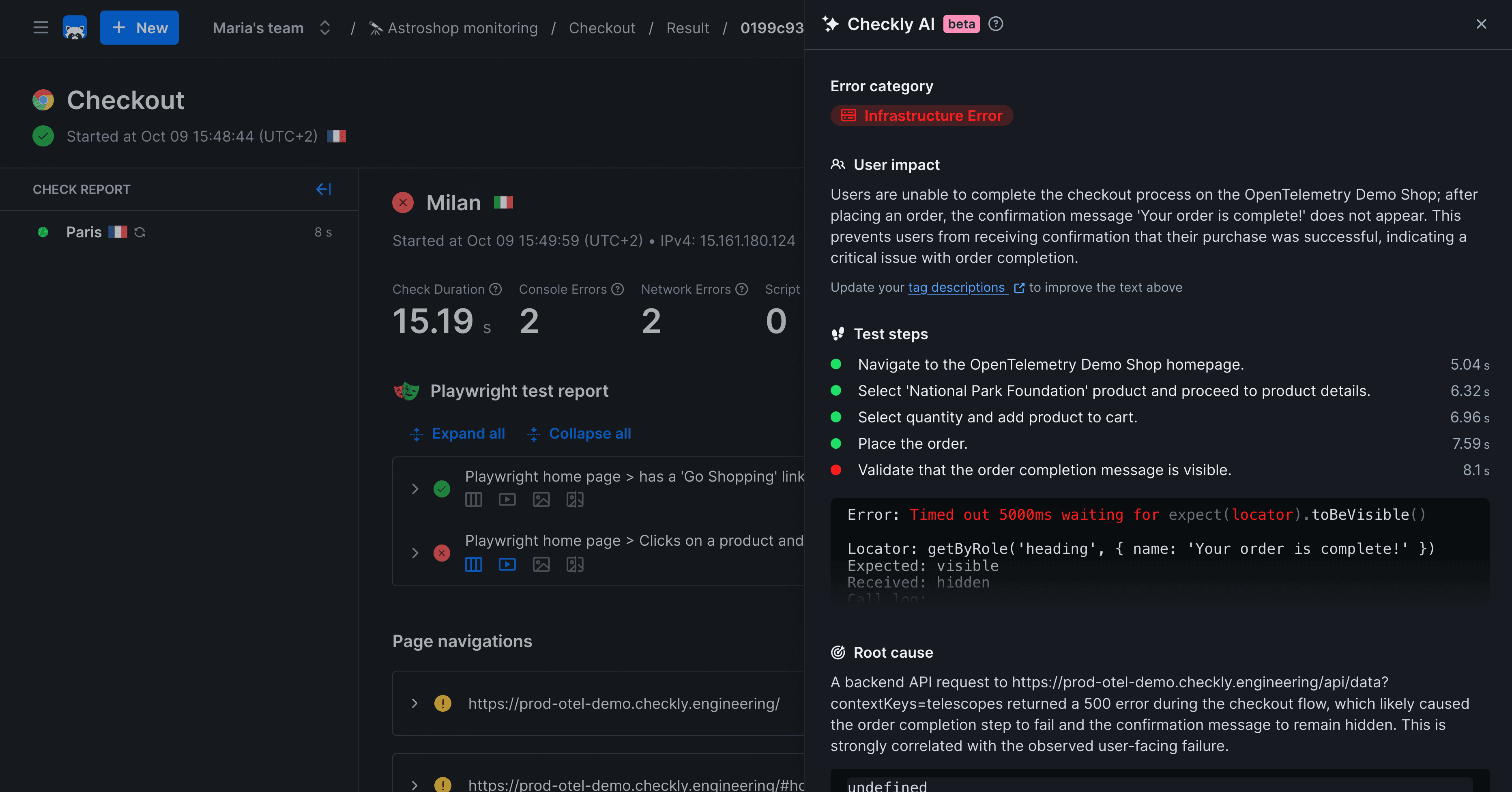
MCP
Model Context Protocol
Native MCP server for direct integration with AI assistants and agent frameworks.
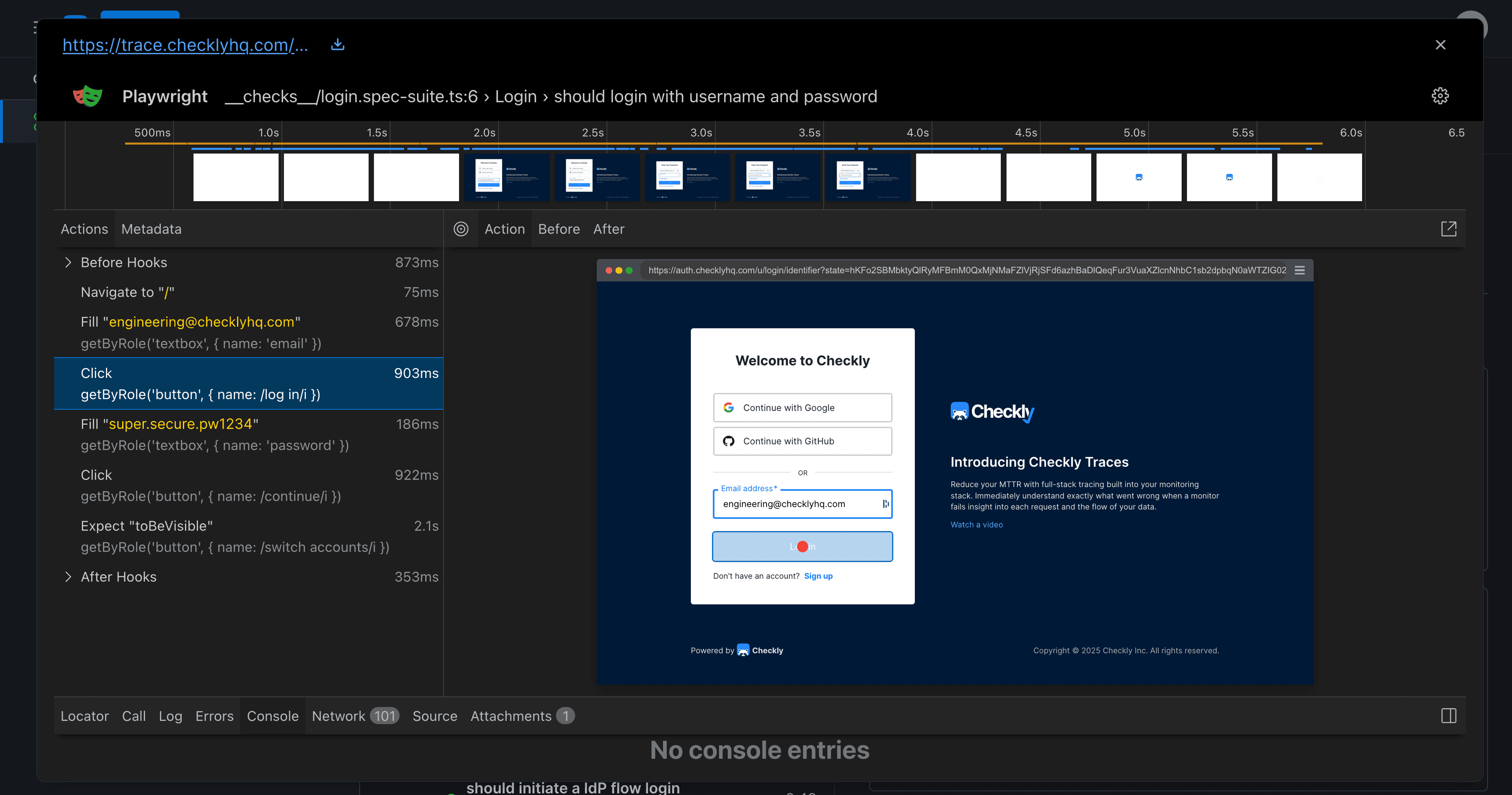
Skills
Pre-built agent capabilities
Ready-to-use skills that let agents monitor deployments, verify fixes, and respond to incidents.
APIs
Built for programmatic access
RESTful APIs and SDKs designed for programmatic access by AI agents. Create monitors, retrieve results, and manage alerts.
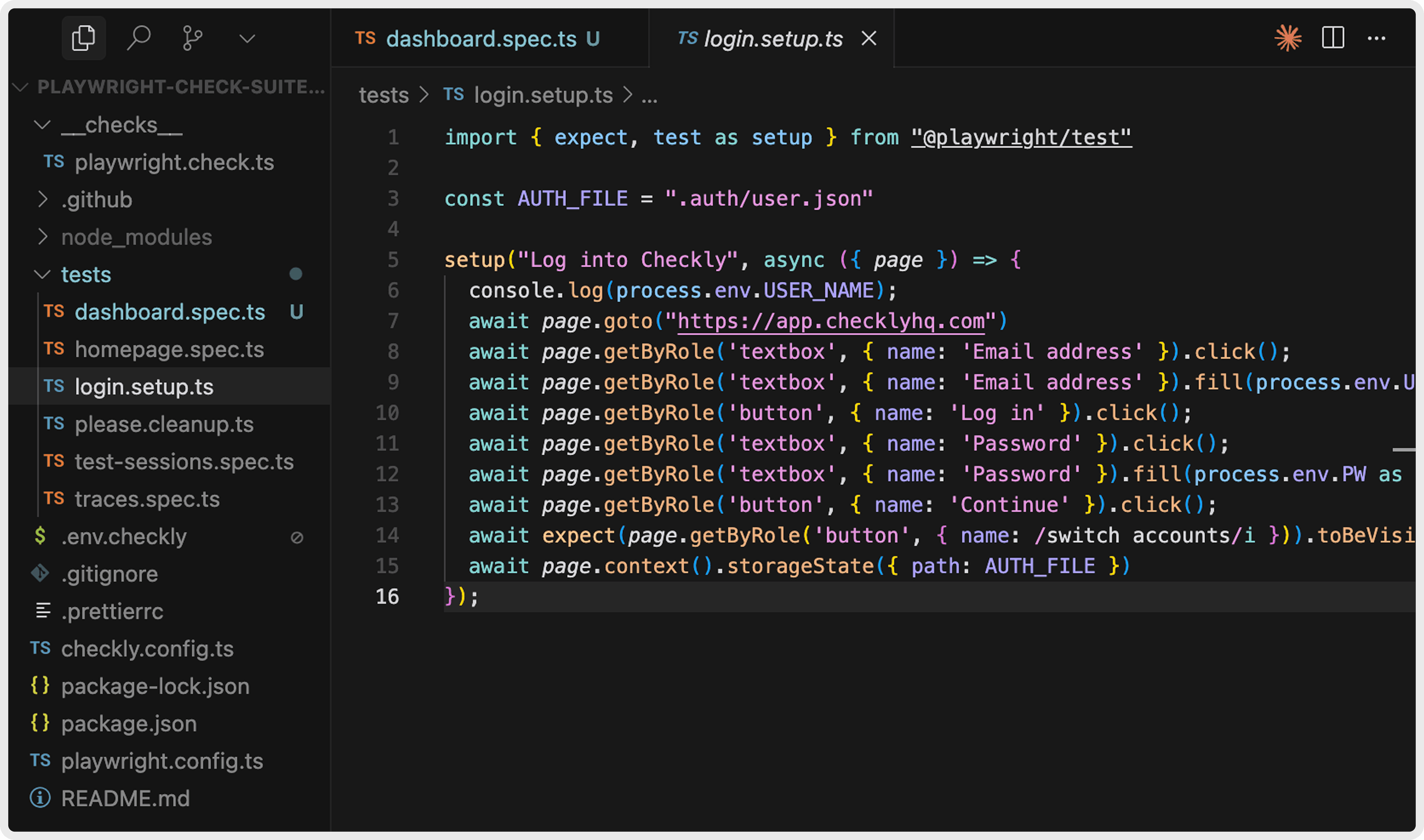
See how agents use Checkly to close the loop
From incident detection to verified resolution, AI agents can handle the entire reliability lifecycle using Checkly's APIs and CLI.
// Agent subscribes to monitoring signals
const webhook = await checkly.webhooks.create({
  url: 'https://agent.example.com/alerts',
  events: ['check.failed', 'check.degraded']
})What agents build with Checkly
From deployment validation to continuous optimization, see how AI agents use Checkly to keep systems reliable around the clock.
Autonomous deployment validation
A coding agent ships a change, Checkly detects degraded performance via synthetic checks, and feeds results back through MCP, and the agent rolls back or patches without human intervention.
Self-healing incident response
An ops agent receives a Checkly incident via MCP, correlates it with recent commits and error logs, then opens a PR with a fix, all before your on-call engineer wakes up.
Proactive check generation
An agent monitors your repo via GitHub integration, detects new endpoints or user flows, and automatically generates Playwright checks to match, keeping coverage current as your product evolves.
Intelligent triage with context
An agent cross-references Checkly incidents with support tickets and analytics data to surface which outages are customer-impacting, then auto-responds to affected users or escalates appropriately.
Continuous reliability optimization
An agent analyzes check results over time, identifies flaky tests or slow endpoints, and submits targeted improvements, turning monitoring data into measurable reliability gains.
Automated SLA reporting
An agent aggregates Checkly uptime data across services, generates compliance reports against SLA commitments, and proactively alerts stakeholders before thresholds are breached.
Integrates with your agentic stack
Connect Checkly to AI frameworks, CI/CD pipelines, and incident management tools. Build agents that can monitor, alert, and respond to production issues.

Slack
Get alerts and let agents respond directly in Slack channels.

PagerDuty
Trigger incidents that agents can acknowledge and resolve.

OpsGenie
Route alerts to the right team automatically based on your escalation policies.

Datadog
Forward synthetic monitoring data to your observability stack.

Grafana
Visualize monitoring data in Grafana dashboards for comprehensive observability.

Vercel
Automatic deployment verification and preview environment monitoring.
Slack
Get alerts and let agents respond directly in Slack channels.
PagerDuty
Trigger incidents that agents can acknowledge and resolve.
OpsGenie
Route alerts to the right team automatically based on your escalation policies.
Datadog
Forward synthetic monitoring data to your observability stack.
Grafana
Visualize monitoring data in Grafana dashboards for comprehensive observability.
Vercel
Automatic deployment verification and preview environment monitoring.

Terraform
Manage your monitoring infrastructure alongside your application code.

Pulumi
Define monitors in TypeScript, Python, Go, or any Pulumi language.

Honeycomb
Send monitoring events to Honeycomb for deep observability and debugging.

MS Teams
Receive alerts directly in Microsoft Teams channels.

FireHydrant
Trigger incidents in FireHydrant for streamlined incident management.

Rootly
Connect to Rootly for automated incident response and resolution tracking.
Terraform
Manage your monitoring infrastructure alongside your application code.
Pulumi
Define monitors in TypeScript, Python, Go, or any Pulumi language.
Honeycomb
Send monitoring events to Honeycomb for deep observability and debugging.
MS Teams
Receive alerts directly in Microsoft Teams channels.
FireHydrant
Trigger incidents in FireHydrant for streamlined incident management.
Rootly
Connect to Rootly for automated incident response and resolution tracking.
Give your agents the signals they need
Build AI agents that can detect, diagnose, and resolve production issues autonomously. Start with Checkly's monitoring infrastructure today.